Hey folks, let’s cut to the chase: if you’re a welding shop owner or engineer wondering if a welding robot can actually handle MIG welding, you’ve probably stared at a bunch of mixed info online. Some sources swear it’s the only way to go, others act like it’s a flash-in-the-pan trick that only works on super simple parts. Here’s the thing—we’re welding robot suppliers, and we’ve seen first-hand how MIG and robots fit (or don’t) in real shops, not just lab tests. Let’s break this down like we would over a coffee in our warehouse, no jargon, no fluff. Welding Robot
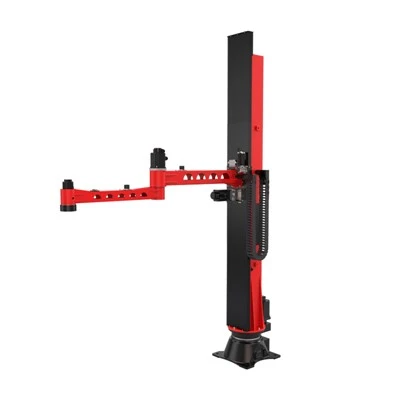
First, let’s make sure we’re on the same page: MIG welding (short for Metal Inert Gas, some folks call it GMAW now, but we’ll stick to MIG since that’s what most guys use on the floor) is that wire-fed, gas-shielded process you see on everything from car frames to patio railings. You feed a solid or metal-cored wire, it melts, and the argon/CO2 mix shields the pool from gunk in the air so the weld is strong. Welding robots, on the other hand, are robotic arms that repeat the same path, weld settings, and speed hundreds or thousands of times—no human gets tired, no one misses a mark because they were staring at a 12-inch weld for an hour. So can those two play nice? Spoiler: hell yeah, 90% of the time. But it’s not just slapping a robot arm and a MIG gun together—there’s some specific stuff you gotta get right.
Wait, let’s start with the basics that most guys skip: why would you even put MIG on a robot instead of a human? Let’s be real, human MIG welders are great for custom, small runs, but if you’re doing 500 identical brackets a week? A human’s gonna get fatigued by day 3, their welds will look different each time, and you’re paying them $25 an hour plus benefits to do something a robot can do for pennies a part. We worked with a fabrication shop last year that was paying three welders to turn out 300 steel trailer hitch brackets a day. They switched to a 6-axis MIG robot, and they now run two shifts with one operator, cranking out 1,200 brackets a day, and their weld defect rate dropped from 8% to 0.2%. That’s not lab magic—that’s real shop stuff.
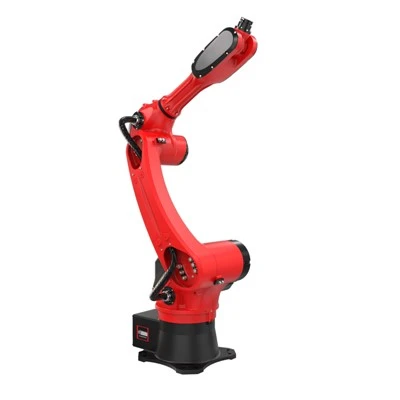
Now, the big question: does every welding robot work for MIG? Nope, and we’ve seen guys waste money buying the wrong setup. First off, you can’t just grab any old industrial robot. For MIG, you need a robot that can handle constant movement—because MIG relies on consistent wire feed speed, travel speed, and stick-out (that’s how far the wire sticks out of the gun tip) to keep the weld clean. Old-school robots that were built for spot welding (like car assembly line arms that just clamp and touch two sheets) often can’t move smoothly enough for MIG. Spot weld is just a quick zap; MIG is a continuous process, so the arm has to adjust its speed even when it’s going around a tight curve. We recommend 6-axis robots specifically, because they can reach around corners, under flanges, and get into spots that a 4-axis robot can’t. That’s non-negotiable for most MIG applications.
Then there’s the MIG equipment itself. You can’t use a regular MIG gun on a robot. Regular guns are designed for humans to hold, so they’re bulky and they flex a little when you’re welding. Robot guns are lighter, stiffer, and balanced for the arm’s movement—no flexing mid-weld, which would throw off your wire feed and mess up the weld. Also, wire feed consistency is everything for MIG. If the wire is spitting or feeding too fast, you get porosity (tiny holes in the weld) or burn-through (holes in the part). So you need a MIG power source that’s hooked up directly to the robot, not a generic unit sitting on the floor. Modern power sources for robotic MIG have “synergic control” which basically means the robot tells the power source exactly how fast to feed wire, how much current, and how much voltage, so it’s all synced up. No more guessing if you set the right voltage for 0.045” steel vs. 0.035”—the robot handles it.
Wait, what about the “hard” parts? Like parts that are super irregular, or small batches? Yeah, a lot of guys think robots only work on big, simple parts, but that’s not true with modern software. You can program a robot fast these days—no more taking weeks to code a path. We use offline programming software that lets you draw your part on a computer, drag-and-drop weld points, and the robot simulates the path before you even touch it. If you’ve got a run of 10 custom parts? You can code each weld path in an hour, vs. a welder spending a day on them. We also do collaborative robots (cobots) for smaller shops that can’t handle a big industrial robot setup. A lot of our clients are small fabrication shops that do mix of small batches and high runs, and cobots are perfect for that—they’re safe to work next to humans, no safety cage needed, and you can teach them a weld path in 10 minutes by just moving the arm around. One of our customers, a small metal furniture maker, uses a cobot MIG setup for custom chairs, and they say it cut their weld time in half, no reworks.
But let’s be real, it’s not all rainbows. There are cases where a MIG robot might not be the right call. If you’re doing 10 parts a week, and each part is totally different? It might not be worth the cost to set up a robot. The programming and fixturing (that’s the tools that hold your part in place) might cost more than just hiring a welder for a year. Also, super thin materials—like 16-gauge sheet metal—can be tricky. MIG is a heat-intensive process, so burn-through is easier on thin stuff. But wait, we’ve fixed that for a lot of clients with pulse MIG, which is a setting that turns the current on and off really fast, so you get less heat input. It still uses a robot, so the travel speed is consistent, but the pulse keeps the heat low enough for thin metal. We had a customer who welded 14-gauge aluminum patio parts, and they were getting 5% burn-through with a human; with a robotic pulse MIG setup, it was zero.
Another common myth: “Robotic MIG welds are worse than human welds.” No, not if it’s set up right. Humans have variable welds—one welder’s weld might be a little taller, another’s might be thinner. Robots do exact same thing every time, so the strength and appearance are consistent. That’s huge for industries that need strict quality, like construction parts or agricultural equipment. You don’t want a tractor frame failing because one weld was too thin and another was too thick. We have a client that makes farm implements, and they switched from human MIG to robotic, and their third-party inspection found that their weld strength was 12% more consistent across all parts. That’s not a fluke—that’s the robot doing exactly what it’s programmed to do.
Wait, let’s talk about setup, because that’s where a lot of guys mess up. You can’t just plop a robot in your shop and expect it to work for MIG. You need fixturing that holds the part exactly the same every time. If your part moves a tenth of an inch when you clamp it, the robot’s path will be off, and you’ll get a bad weld. We help our clients design custom fixtures, or use quick-change fixtures for small batches—so you can swap out a fixture for a different part in 15 minutes, not hours. Also, maintenance: robots are pretty low-maintenance, but you gotta clean the MIG gun tip every shift, change the liner in the gun every few months, and check the wire feed. A lot of new robot owners skip this, and then the robot spits or feeds wire wrong, and they think “robotic MIG doesn’t work”—no, they just didn’t maintain their equipment.
Let’s wrap this up with some real numbers, because numbers matter. Our average client who switches to robotic MIG:
- Cuts weld labor costs by 40-60%
- Reduces weld defects by 80-90%
- Increases production output by 200-300%
That’s not marketing fluff—we track this for every client, and the numbers hold. Now, does that mean every shop should run out and buy a MIG robot? Not exactly. But if you’re doing high-volume runs, or struggling with inconsistent welds and labor shortages, it’s absolutely worth a look. We’ve worked with everything from 10-person fab shops to big auto parts manufacturers, and MIG is the most common process we see paired with robots, because it’s versatile, cost-effective, and easy to automate.
Wait, one more thing for the skeptics out there: we’ve all heard stories of robots breaking down, right? Yeah, but modern welding robots have mean time between failures of over 10,000 hours. That’s like, if you run two shifts a day, 5 days a week, that’s 4 years before you even need a major repair. And we offer 24/7 support, so if something does go wrong, we’re on the phone helping you fix it same day. No waiting weeks for a technician to show up.
So to answer the original question: Can a welding robot be used for MIG welding? Hell yes, and it’s one of the most common, effective automation setups out there. It’s not just for big factories with millions in budget—small shops can get into it too, with cobots and entry-level setups that fit right in your existing space. The key is picking the right robot, the right MIG equipment, and setting it up properly, not just grabbing the first robot you see.
If you’re curious if robotic MIG would work for your shop—whether you’re doing brackets, furniture, agricultural parts, anything—we can walk you through your application, show you actual numbers from clients similar to you, and even do a demo. No pressure, no sales pitch, just real talk from folks who’ve been in the welding automation game for years. Hit us up to chat through your needs, and we’ll help you figure out if it’s a fit.
CNC Robot References
- "Robotic Welding: A Practical Guide," Welding Research Council, 2022
- "GMAW (MIG) Robotic Automation Best Practices," American Welding Society, 2021
- Collaborative Robots for Welding Applications, International Federation of Robotics, 2023
- "Cost-Benefit Analysis of Robotic MIG Welding for Small Fabrication Shops," Journal of Manufacturing Processes, Vol. 45, 2020
Robotic Technology (GD) Co., Ltd.
Robotic Technology (GD) Co., Ltd. is one of the most experienced welding robot manufacturers and suppliers in China, also supports custom service and one year warranty. Please feel free to wholesale CE approved welding robot for sale here from our factory. Contact us for quotation.
Address: Room 102, No. 30,Hengfeng 2nd Road,Daguo, Changping Town, Dongguan City,Guangdong,China
E-mail: admin@iroboticplus.com
WebSite: https://www.rb-tic.com/
