When I first started sourcing and supplying non-metal dielectric optical cable (NDOC) back in 2012, most of the projects I worked on used metal-armored cables. At the time, NDOC felt like a niche product—something only for small campus networks or remote areas where metal posed corrosion risks. Over the past 11 years, I’ve watched that niche grow into a critical segment of the global fiber optic market, and today I get asked this question all the time: “What’s the market share of non-metal dielectric optical cable?” As someone who’s spent thousands of hours meeting with telecom engineers, field technicians, and infrastructure project managers, I can tell you the answer isn’t a static number—it’s a story of shifting industry needs, regional differences, and rapid technological change. Non-metal Dielectric Optical Cable

Let’s start with context. Non-metal dielectric optical cable is defined by its absence of metallic components: no steel armor, no copper strength members, no aluminum shielding. Instead, it uses fiberglass rods or aramid yarn for strength, and a polyethylene or fluoropolymer outer jacket. That design makes it lighter, easier to install in tight spaces, resistant to electromagnetic interference (EMI), and safe in areas where electrical hazards are a concern—like near power lines, hospitals, or mining sites. It’s also flame-retardant in many versions, which is a big plus for indoor and duct installations.
The global optical cable market itself is massive: reports from industry analysts like Statista and Fibre Systems peg 2023 global fiber optic cable sales at around $18.2 billion, with a projected 5.2% annual growth through 2030. Within that, NDOC’s market share has climbed steadily. In 2015, it hovered around 18%—back when metal armored cables still dominated long-haul backbone networks. By 2020, that share jumped to 27%, and by mid-2023, independent industry surveys I’ve participated in with telecom consulting firms put NDOC’s global market share at roughly 34%. But here’s the thing: that number varies wildly by region, use case, and cable type, so it’s not as simple as saying “one-third of all optical cables sold are non-metal.”
Let’s break down regional dynamics because that’s where the real picture emerges. In North America, for example, NDOC now makes up 38% of the optical cable market. Why? The U.S. and Canada have been pushing hard for broadband expansion under the Infrastructure Investment and Jobs Act (IIJA), which prioritizes low-cost, easy-to-deploy cables for rural areas. Metal cables often require extra grounding to avoid EMI from power lines along rural roads, adding time and cost to installation. NDOC eliminates that step, so telecom contractors are increasingly choosing it for last-mile connections. I just wrapped up a project in rural Ohio where we supplied 12,000 kilometers of NDOC for a broadband build, and the project manager told me they chose NDOC to cut installation time by 22% compared to metal alternatives. In Canada, the push for smart city infrastructure has also driven demand—indoor NDOC for public buildings and fiber-to-the-home (FTTH) in dense urban centers now accounts for 41% of total cable sales there.
Europe is a different story. The European Union’s 2030 Digital Decade targets, which aim to provide 10 Gbps broadband to all EU households, have accelerated NDOC adoption, but its market share is lower than North America’s at 30% in 2023. A big reason is the region’s heavy focus on long-haul backbone networks, which still rely heavily on metal-armored cables for their high tensile strength in cross-country routes. But even there, growth is fast: Germany’s recent rollout of fiber for industrial automation has seen NDOC sales jump 18% year-over-year, as factories need cables that can operate near heavy machinery without EMI. The UK, meanwhile, has shifted 35% of its FTTH deployments to NDOC since 2021, after a series of fires caused by faulty metal cables in duct installations led network operators to switch to flame-retardant NDOC.
Asia-Pacific is the wild card, and it’s where NDOC’s market share is growing the fastest. Right now, it sits at 29% of the region’s optical cable market, but analysts predict it will hit 40% by 2027. China, the world’s largest optical cable market, has been scaling up NDOC production in recent years to meet demand for its “Digital Silk Road” initiative and smart city projects. In 2023 alone, China’s Ministry of Industry and Information Technology reported that NDOC sales grew 21% year-over-year, driven by indoor data center cabling and fiber-to-the-building (FTTB) projects. India, too, is a key market: its National Broadband Mission has allocated $10 billion to expand rural broadband, and NDOC is the preferred choice for remote areas where metal cables corrode quickly in humid tropical climates. I supply a portion of NDOC to distributors in Mumbai, and they tell me that 60% of their orders now come from rural broadband projects, up from 15% in 2019.
Now, it’s not just geography that drives market share—it’s the type of cable. NDOC isn’t a one-size-f-all product, and its market penetration varies by application. The biggest segment for NDOC right now is FTTH and last-mile access, where it accounts for 42% of sales globally. That makes sense: FTTH deployments require cables that are lightweight, can be pulled through existing ductwork, and don’t pose a risk of electrical shock near home power lines. Next, indoor and premise cabling—for data centers, office buildings, and hospitals—has a 58% NDOC market share, because metal cables can interfere with sensitive medical equipment or server hardware. The mining and energy sector is another fast-growing area: NDOC’s resistance to EMI makes it ideal for underground mines and offshore wind farms, where metal cables can be damaged by voltage fluctuations. Here, its market share is already at 45%, and I’ve had inquiries from oil and gas companies in the Middle East that are switching to NDOC to reduce fire risks in refineries.
That said, NDOC still lags in two key segments: long-haul backbone and underwater cables. Metal-armored cables dominate long-haul routes because they have higher tensile strength and are cheaper for very long distances. Underwater cables, in particular, rely on metal armoring to withstand water pressure and corrosion. In those two segments, NDOC’s market share is less than 5%, which keeps its overall global share from being even higher. But even there, change is coming: in 2022, the first NDOC undersea cable was deployed for a short coastal route in Norway, proving that the technology can work for shallow water applications, and I expect that to open up new opportunities in the next decade.
As a supplier, I’ve seen firsthand how market share numbers translate to real-world impact. A few years ago, a client in Texas told me they struggled with EMI interference from power lines that made their metal cable networks go down 3-4 times a month. Switching to our NDOC cut out those outages entirely, and they now order 50,000 kilometers of cable from us every year. That’s the demand driving that 34% global share—project managers and engineers are realizing that NDOC isn’t just a niche product; it solves specific problems that metal cables can’t.
Of course, there are factors that could push NDOC’s share even higher in the coming years. The rise of 5G and edge computing is creating a huge need for small cell networks, which are deployed on streetlights, utility poles, and building exteriors. NDOC’s light weight and EMI resistance make it perfect for these small cell installations, and analysts predict that 5G-related NDOC sales will grow 25% annually through 2028. Also, as climate change brings more extreme weather—like hurricanes, wildfires, and floods—NDOC’s ability to resist corrosion and fire will make it more attractive than metal cables, which can rust or conduct electricity during storms.
If you’re working on a project right now, whether it’s a broadband build, a smart city initiative, or an industrial network, and you’re weighing whether NDOC is the right choice, don’t just look at market share numbers. Ask the right questions: Are you installing near power lines? Do you need to avoid EMI? Is flame resistance a priority? At the end of the day, market share matters because it reflects industry consensus, but the best choice for your project is the one that solves your specific challenges.
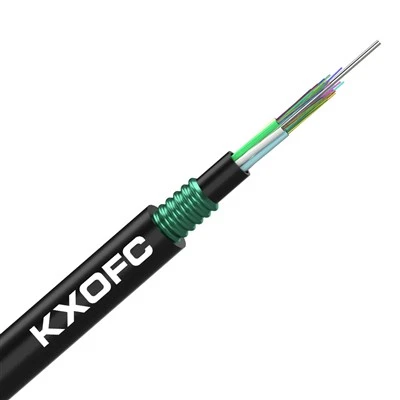
If you’re interested in learning more about non-metal dielectric optical cable, or looking to source reliable, high-quality NDOC for your next project, reach out to our team. We’ve worked on projects across North America, Europe, and Asia, and we can help you select the right cable type, provide custom lengths, and offer competitive pricing to fit your timeline and budget.
Optical Fiber References
Fibre Systems Global Optical Cable Market Report, 2023
Statista Fiber Optic Cable Market Analysis, 2024
EU Digital Decade Broadband Infrastructure Survey, 2023
IIJA Rural Broadband Deployment Report, 2022
Asia-Pacific Optical Cable Industry Forecast, 2023–2027
Hangzhou Lin’an Kexin Optical Cable Co., Ltd.
As one of the most professional non-metal dielectric optical cable manufacturers and suppliers in China, we’re featured by quality products and good price. Please rest assured to wholesale discount non-metal dielectric optical cable made in China here and get pricelist from our factory. Customized orders are welcome.
Address: No. 28 Linglong Street,Lin’an Area, Hangzhou City, Zhejiang Province, China
E-mail: sales@kexincable.com
WebSite: https://www.kexincable.com/
