If you’ve ever worked in the aluminum, steel, or battery materials industry, you know graphitized petroleum coke (GPC) is the quiet backbone of your operations. As a supplier who’s been in this space for over 12 years, I’ve heard my fair share of myths: that all petroleum coke grades create the same quality GPC, or that refining out impurities is just a matter of time in the graphitization furnace. Early on, I made a mistake that drove this lesson home: I shipped a batch of low-grade raw coke without digging into its chemical makeup, and the GPC produced from it was rejected by a major steel manufacturer for its inconsistent electrical conductivity. That mistake cost us a repeat client, so I’ve spent years studying exactly how raw petroleum coke’s quality shapes the final graphitized product. Let’s break this down plainly, from the perspective of someone who sees this play out in our furnaces every day. Graphitized Petroleum Coke
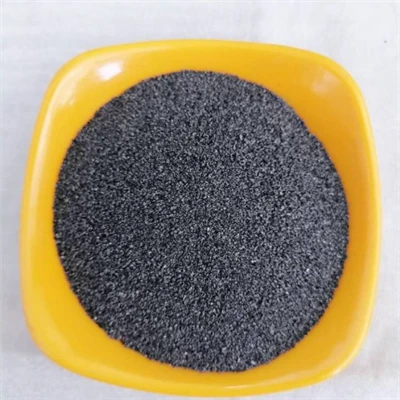
First, let’s define what raw petroleum coke is, in case you’re new to this space. It’s a solid carbon byproduct of the oil refining process, created when heavy residual oil is cracked into lighter fuels like gasoline or diesel. Raw coke isn’t a uniform material—it ranges from “green coke” (unprocessed, mined from refineries) to “calcined coke” (heated to remove moisture and volatile compounds, used as a precursor for GPC). The quality of this starting material isn’t just a technical detail; it’s the foundation of every property a GPC buyer cares about. The most critical factors here are carbon content, volatile matter, sulfur, metal impurities, and structural consistency—and each one impacts the final GPC in tangible, often expensive ways.
Let’s start with carbon content, the most basic but most impactful metric for raw coke. Raw petroleum coke is typically categorized by its carbon content: low-grade might have 90–92% fixed carbon, medium-grade 93–95%, and premium grade 96% or higher. When we graphitize coke, the process involves heating it to 2,800–3,200°C to rearrange carbon atoms into a crystalline graphite structure. The higher the fixed carbon in the raw material, the less energy we need during graphitization to reach that 98%+ carbon purity required for GPC. I’ve seen this firsthand: a low-carbon raw coke will leave residual non-carbon compounds that can’t be fully burned off during heating, leading to a GPC that ends up with 95% or less carbon. For aluminum smelters, which rely on GPC as an anode material, even a 1% drop in carbon content translates to 2–3% higher energy use per ton of aluminum produced. That adds up fast—for a smelter producing 500,000 tons of aluminum a year, that’s an extra $1–2 million in annual energy costs. It’s not just a buyer’s problem, either; we’ve had to reject entire batches of low-carbon raw coke because it would force us to cut corners in graphitization to meet a client’s delivery timeline, resulting in a subpar product we couldn’t stand behind.
Next, volatile matter (VM) is a make-or-break factor that many new suppliers overlook. Raw coke’s volatile matter is the percentage of compounds that evaporate when heated—this includes water, hydrogen, nitrogen, and sulfur compounds. Green raw coke, for example, can have volatile matter as high as 18%, while premium calcined raw coke has it below 0.5%. When graphitizing, volatile matter doesn’t just evaporate gently; it can cause defects in the graphite structure if it’s released too quickly. If raw coke has high volatile matter, heating it too fast to reach graphitization temperatures creates bubbles and cracks in the final GPC. Those cracks reduce the material’s mechanical strength, making it more likely to break during transport or use. For battery manufacturers that use GPC as an anode, even microcracks can shorten battery cycle life, because the cracks allow electrolyte to seep into unintended areas, causing degradation. We once worked with a startup battery maker that switched to a cheaper low-VM raw coke, and their GPC had a 12% higher cycle failure rate than expected—they came back to us within three months, saying our premium low-VM raw coke eliminated that issue entirely.
Sulfur content is another critical impurity, especially for clients in steel and aluminum production. Raw coke’s sulfur content ranges from 0.5% for low-sulfur grades to 5% or higher for high-sulfur “petroleum coke” (often called “petcoke” in the industry). When you graphitize high-sulfur raw coke, the sulfur doesn’t just evaporate—it reacts with other compounds in the furnace to form sulfur dioxide, a harmful greenhouse gas that requires costly emissions controls. But more importantly, residual sulfur in the GPC acts as a contaminant. For aluminum anodes, sulfur in the GPC will contaminate the molten aluminum, leading to defects in cast products. For steelmakers, sulfur in GPC can cause hot shortness—a condition where steel becomes brittle at high temperatures, ruining large batches of finished steel. A few years back, we had a steel client reject a 200-ton GPC shipment because it had 0.3% higher sulfur than specified, and testing showed their steel had a 15% higher reject rate from that batch alone. That’s why we only source raw coke with sulfur content below 0.1% for our GPC meant for steel and aluminum; even small sulfur spikes have massive downstream costs.
Metal impurities, like vanadium, nickel, and iron, are the hidden culprits that ruin GPC performance. Raw coke picks up these metals from the crude oil it’s refined from—heavy crude, for example, often has higher vanadium content than light crude. When graphitized, these metals don’t burn off; they remain as trace contaminants in the graphite structure. For aluminum anodes, vanadium in GPC acts as a “poison” that reduces anode efficiency by 3–5%, requiring more electricity to produce the same amount of aluminum. For lithium-ion battery anodes, even 100 parts per million (ppm) of iron in GPC can cause unwanted side reactions that reduce battery capacity and safety. I learned this the hard way when a battery supplier ordered a test batch of GPC from a new raw coke source, and their lab tests found 120 ppm of iron—enough to make the GPC unusable for their high-performance EV batteries. We now test every raw coke shipment for metal impurities within 48 hours of delivery, because even trace metals can make the final GPC unsellable for the most demanding applications.
Finally, structural consistency of the raw petroleum coke shapes GPC’s uniformity, which is key for high-volume manufacturing. Raw coke can be either “needle coke” (a dense, fibrous structure) or “sponge coke” (a porous, irregular structure). Needle coke, made from heavy oil residues with a consistent, aligned carbon structure, is the gold standard for GPC used in EV batteries and high-strength steel. Sponge coke, by contrast, has a porous structure that’s cheaper to produce, but it creates a GPC with inconsistent density and electrical conductivity. For a steelmaker rolling 1,000 tons of steel a day, inconsistent GPC conductivity means some anodes will wear out faster than others, leading to frequent production stops and uneven product quality. We work with refineries that specialize in producing uniform needle coke for our high-end GPC, because the structural consistency translates directly to less downtime and higher quality for our clients.
Now, let’s talk about what this means for you, as someone looking to source GPC. It’s not just about picking the lowest price raw coke and heating it up. The quality of raw petroleum coke is a direct input to every stage of GPC production, from furnace efficiency to final product performance. A cheaper raw coke might save you money upfront, but it can lead to higher energy costs, more rejected batches, and lost production time downstream. Over the years, we’ve built a network of refineries that adhere to strict quality standards for raw coke—we test every shipment for fixed carbon, volatile matter, sulfur, and metal impurities before it even arrives at our facility, because we know skipping that step is how mistakes happen.
If you’re in the market for graphitized petroleum coke, whether for aluminum anodes, steel production, or battery materials, the best way to ensure you get a product that meets your needs is to work with a supplier who understands how raw coke quality impacts the final product. We’ve spent 12 years refining our process, from sourcing raw coke to operating our graphitization furnaces, to make sure every GPC shipment we send meets the strictest standards. No two applications are the same—so if you’re looking for GPC tailored to your specific needs, whether that’s low sulfur for steel, high conductivity for aluminum, or low impurities for EV batteries, we can work with you to source the right raw petroleum coke and produce a GPC that fits your requirements.
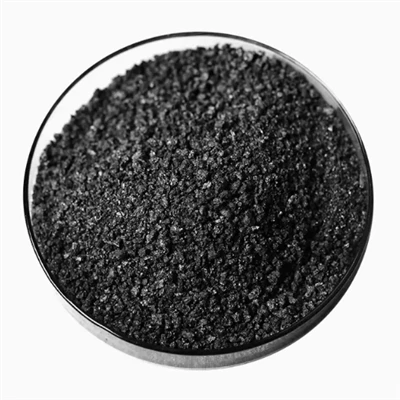
If you’re ready to discuss your GPC needs, test a small batch, or learn more about how raw coke quality can impact your operations, don’t hesitate to reach out. We’re here to answer your questions, share lab data, and help you find the right solution for your business.
High Power Graphite Electrode References
- "Petroleum Coke: Properties, Processing, and Industrial Applications" — International Energy Agency, 2021
- "Graphitization of Carbon Materials: Fundamentals and Applications" — Elsevier, 2019
- "Impurity Effects in Graphitized Anodes for Aluminum Smelting" — Journal of Light Metals, 2018
- "Battery Grade Graphite: Material Requirements and Performance Metrics" — Nature Energy, 2020
- "Sulfur Removal in Petroleum Coke Processing" — American Chemical Society, 2022
Hebei Fengchao Import and Export Co., Ltd.
Hebei Fengchao Import and Export Co., Ltd. is one of the most professional graphitized petroleum coke manufacturers and suppliers in China. As we have world-leading production equipment and strong manufacturing capabilities, we warmly welcome you to wholesale bulk premium graphitized petroleum coke made in China here from our factory. Also, quotation is available.
Address: Yigao Intelligent Plaza, Building A, Congtai District, Handan City, Hebei Province, China
E-mail: China@fc-graphite.com
WebSite: https://www.fc-graphite.com/
