If you’ve ever spent time on a shop floor watching a CNC mill sit idle because of a positioning error, or a linear actuator miss its mark mid-production run, odds are the issue traces back to something smaller than you might expect: the ball screw support bearings. As someone who’s spent the last 18 years supplying precision ball screw support bearings to machine builders, aerospace component shops, and medical device manufacturers, I’ve seen my fair share of failure cases. It’s easy to dismiss these tiny components as “just bearings,” but when a ball screw system fails, the root cause almost never lies with the screw itself—9 times out of 10, it’s the supporting bearings that give out. Ball Screw Support Bearings
Today, I want to walk you through how we analyze those failures, what we’ve learned from 1,200+ failed bearing returns over the years, and why understanding this process can save you from costly downtime.
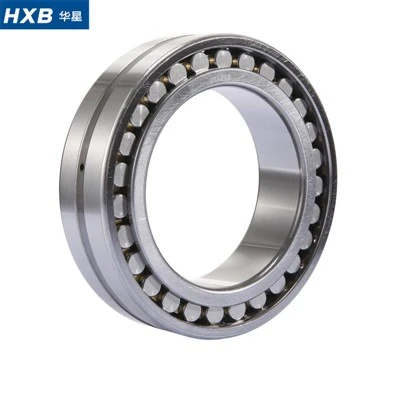
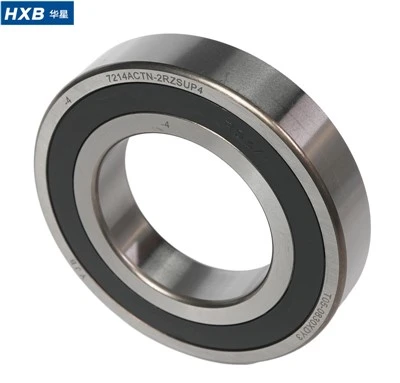
First, let’s set the stage: ball screw support bearings aren’t like the bearings in a car wheel. They’re precision-engineered to handle axial loads, radial loads, and high rotational speeds—sometimes up to 10,000 RPM for high-speed machining centers. The two most common types we supply are angular contact ball bearings (for preloaded, high-precision setups) and cylindrical roller bearings (for heavy-load applications). When they fail, the first mistake most people make is replacing them with a generic bearing from a hardware store and calling it a day. That’s how you end up with repeat failures, or worse, secondary damage to the ball screw.
Our analysis process starts the second a bearing comes back. We don’t just look for obvious wear—we methodically break down every variable that could have led to the failure. Let’s start with the first step: visual inspection, which is the quickest way to spot red flags.
When a failed bearing arrives, the first thing we do is clean it gently (no high-pressure wash, that can erase critical evidence) and lay it out on a white lab table. I’ve seen bearings with brown, scorched raceways that tell a story of insufficient lubrication. I’ve seen brinelling—those small, indentations on the raceways and balls that look like someone pressed a thumbnail into Play-Doh—from a sudden impact load, like a tool crash that sent a shock through the ball screw. Once, we got a set of bearings that had their steel retainers welded together from excessive heat; turns out the end user had run the axis at 120% of the rated speed for three months straight. Visual inspection also helps us rule out manufacturing defects early—though those are rare, less than 2% of the failures we see are our own product issues.
Next, we move to dimensional analysis. Precision ball screw support bearings are made to tolerances of microns. A 1-micron difference in the inner ring bore, or a misaligned axial preload, can cascade into failure. We use a coordinate measuring machine (CMM) to check the raceway curvature, the roundness of the inner and outer rings, and the size of each ball. If we find that the raceway has a wavy pattern that doesn’t match our manufacturing specs, that’s not a bearing defect— that’s a sign the housing the bearing is pressed into was misaligned during installation. Once, a customer kept having front bearings fail on a new high-speed lathe; our dimensional check showed the inner ring was slightly oval, so we traced it back to the customer’s assembly team pressing the bearing into a housing that had a 2-micron out-of-round condition. They fixed the housing, and they haven’t had a failure in 18 months.
Then there’s lubrication analysis. This is a step most shops skip, but it’s one of the most common causes of failure. We take a sample of the lubricant that was in the bearing (even dried-out grease has traces of the original lubricant left in the raceways) and test it for contamination, viscosity breakdown, and moisture. Contamination is a huge one: if you get a tiny particle of metal shavings, or coolant, or even dust from the shop floor, it can act like sandpaper between the balls and the raceways. We once analyzed a bearing failure in a pharmaceutical packaging machine; the grease sample had 0.8% water content, which is enough to cause corrosion and brinelling over time. The customer had been using a general-purpose grease instead of the high-temperature, water-resistant grease we recommended for their washdown environment.
Once we’ve done those base tests, we move to load and speed verification. A lot of end users don’t realize that ball screw support bearings have a rated dynamic load and a limit speed. If you exceed either, the bearing’s fatigue life drops exponentially—for every 10% over the rated load, life is cut in half, per ISO 281 standards. We work with customers to calculate the actual loads their bearings are seeing: how often the axis moves, the weight of the load it’s moving, the acceleration and deceleration forces. We had a customer in the automotive industry that was using our standard angular contact bearings for a press brake that applied 25,000 lbs of axial force; the standard bearings were rated for 18,000 lbs, so they failed every 6 months. We supplied heavy-load angular contact bearings rated for 30,000 lbs, and their failure interval jumped to 24 months.
One of the trickiest failure causes we see is misalignment. Misalignment between the ball screw, the bearings, and the motor creates side loads that the bearings aren’t designed to handle. It’s a silent killer, too—you might not notice it until a bearing fails, or until your positioning accuracy drops by a tenth of a millimeter. We use a laser alignment tool to check the axis when we’re on-site with a customer, and we’ve found that 60% of repeat bearing failures are due to misalignment, not bad bearings. Last year, a 3D printing service provider sent back a set of bearings that had raceway wear in only one spot; when we did an alignment check, the ball screw was tilted 0.3 degrees relative to the motor. Fixing that alignment eliminated the wear without replacing the bearings, saving them $4,000 in downtime and parts.
We also keep a failure database for every bearing we process. Over 18 years, we’ve cataloged every failure case: the type of bearing, the industry, the root cause, and the solution. That data has helped us refine our recommendations—for example, we noticed that food and beverage customers had a 3x higher failure rate with standard steel bearings in washdown environments, so we started offering corrosion-resistant stainless steel ball screw support bearings with seals rated for high-pressure washdown. That’s one of the reasons our repeat customer rate is over 85%—we don’t just sell bearings, we use failure analysis to give our customers solutions that work for their specific applications.
I want to be clear: sometimes bearings do fail because of a manufacturing defect, though like I said, that’s less than 2% of cases. If you get a bearing failure within the first 100 hours of use, that’s a red flag for the manufacturer, not for your installation. But for failures that happen after a few months or years, it’s almost always a preventable issue: improper lubrication, misalignment, exceeding rated loads, or using the wrong bearing type for the application.
So why does this matter to you? If you’re a machine builder, a maintenance manager, or a production engineer, understanding how to analyze ball screw support bearing failures means less downtime, lower replacement costs, and more consistent product quality. A $50 bearing failure can cost you $10,000 in lost production, so taking the time to diagnose the root cause instead of just swapping out parts is a no-brainer.
Now, I know a lot of you are here because you’re dealing with a recurring bearing failure and you want to get to the bottom of it. If you’ve got a set of failed bearings, or if you’re just looking to make sure your current setup is properly spec’d, we’re here to help. Our team of engineers has decades of experience in ball screw systems, and we offer free failure analysis for customers who purchase our bearings. We’ll work with you to walk through your setup, check for misalignment, verify load and speed ratings, and recommend the right bearing type and lubrication to prevent future failures.
Don’t let avoidable bearing failures derail your production. If you’re ready to troubleshoot your current setup, or if you’re looking for precision ball screw support bearings tailored to your application, reach out to our team to start a conversation about your needs. We’re here to help you keep your axes running smoothly, not just sell you a part.
Precision Angular Contact Ball Bearings References
ISO 281:2019, Rolling Bearings – Dynamic Load Ratings and Fatigue Life Calculation
SKF Bearing Failure Analysis: A Practical Guide (Industry Edition, 2022)
NSK Precision Ball Screw Support Bearing Application Manual, 2021
American Machine Tool Builders Association (AMTBA) Linear Motion Systems Maintenance Best Practices, 2020
Hangzhou Huaxing Kechuang Holding Group Co., Ltd.
Hangzhou Huaxing Kechuang Holding Group Co., Ltd. is one of the leading manufacturers and suppliers of ball screw support bearings in China, featured by quality products and good service. Please rest assured to buy bulk durable ball screw support bearings from our factory. Welcome to view our website for more information.
Address: No.553 Yingbin Road, Linping, Hangzhou, 311100, China
E-mail: wmb@huaxingbearing.com
WebSite: https://www.hxbbearing.com/
