If you’ve ever stepped into a chem lab, biology research space, or even a high school science classroom, you’ve probably stared at a stack of what looks like plain, thin paper—filter paper. I’m the owner of a small filter paper supply company, and I can’t tell you how many times I’ve had customers ask, “Wait, what do you actually use this stuff for, beyond filtering coffee?” Don’t get me wrong, coffee filters are a type of filter paper, but lab-grade versions are way more versatile than just straining grounds. Let’s break down exactly what we (and by “we,” I mean the scientists I work with every day) use filter paper for in the lab, no stuffy textbook jargon required. Filter Paper

First off, let’s cut through the confusion: not all filter paper is the same. Some is super fine, meant to catch tiny particles, while others are more porous for fast filtering. That’s the kind of stuff I stock, so I’ll tie each use back to why having the right kind makes or breaks an experiment.
Let’s start with the most obvious one: separating solids from liquids. Anyone who’s ever done a basic chemistry practical—like precipitating lead iodide for a solubility test—will know this. When you mix two solutions and a solid forms, you can’t just pour it straight; you need to separate that solid so you can weigh it, dry it, or test what it is. Lab filter paper is perfect here because it’s thick enough to not tear under the weight of the wet solid, but porous enough to let the liquid (called filtrate) flow through. I’ve had a customer who works in environmental testing tell me they use our medium-speed filter paper to separate sediment from river water samples. If the paper’s too fast, too many small sediment particles slip through, and if it’s too slow, they’re wasting hours waiting for a 50mL sample to filter. That’s why matching the paper to the task is key.
Next up: quantitative analysis. This is where filter paper gets serious. For things like gravimetric analysis, where you measure the mass of a solid to find out how much of a compound is in a sample, you need filter paper that’s 100% pure. No weird residues from the manufacturing process that’ll add weight and mess up your results. I’ll be honest—some cheap filter paper out there has traces of ash or chemicals that skew measurements. That’s the reason a lot of research labs will only buy filter paper from suppliers like us, because we test every batch to make sure the ash content is super low. For example, if you’re analyzing the amount of sulfate in a water sample, you’ll precipitate barium sulfate, filter it, dry the paper and solid in an oven, then weigh both together. Subtract the pre-weighed mass of the dry filter paper, and you’ve got the mass of barium sulfate, which tells you how much sulfate was there. I’ve seen so many grad students panic because they used the wrong paper, got a weird mass, and had to redo a week-long experiment. Trust me, that’s a headache we help avoid.
Then there’s the stuff that’s not just chemistry—biology and microbiology labs use filter paper all the time too. A big one is microbial sampling. Wait, you’ve probably seen those little test swabs for bacteria on surfaces, but filter paper has a role here too. Some labs use special sterile filter paper disks to collect airborne microbes. You leave the disk out in a petri dish, let the air carry bacteria and fungi onto it, then incubate it to count how many microbes are present. Also, for antibiotic testing—yeah, those little disks you see in the Kirby-Bauer test? Those are often made from high-quality filter paper, soaked in antibiotics, then placed on a bacteria lawn to see how effective the drug is. I get custom orders for these disks all the time, because labs need specific sizes and thicknesses to fit their testing protocols. If the paper’s too thick, the antibiotic doesn’t diffuse right, and the results are off. That’s the kind of detail I get asked about nonstop.
Another cool use is chromatography. Paper chromatography, for anyone who slept through high school chem, is the method you use to separate different pigments in a leaf, or check the purity of a compound. You spot a drop of a mixture onto the bottom of a strip of filter paper, dip the end in a solvent, and the solvent moves up the paper, carrying different components at different speeds. The result is little spots of each pigment or compound separated along the strip. The type of filter paper matters here too—whatman no.1 is the classic one, but I also carry lighter-weight versions for faster separations. I had a customer who’s a high school bio teacher tell me she uses our filter paper for a project where students separate the pigments in spinach leaves, and it’s way more consistent than the cheap paper she used to buy. No weird smudging, which means the kids can actually see the different colors instead of a messy blot.
Wait, let’s not forget about solid-phase extraction (SPE). This is more for analytical labs, the ones that test drugs in blood samples or pesticides in fruit. Basically, you pass a liquid sample through a piece of filter paper that’s coated with a special material that binds to the target compound. So if you’re testing for a pesticide in orange juice, the paper traps the pesticide, while the rest of the juice flows through. Then you wash the paper, and elute the pesticide with a small amount of solvent, so you can test how much is there. Our customers who do food safety testing swear by our high-retention filter paper for this, because it doesn’t let the target compound slip through before it’s supposed to. It’s way more efficient than using other materials, and way cheaper too.
There’s also a less talked-about use in teaching labs: blotting and drying. A lot of lab procedures, like after you do a gel electrophoresis for DNA testing, you need to transfer the DNA from the gel to a membrane. Wait, before that, sometimes researchers use filter paper to blot excess buffer from the gel, so it doesn’t get too soggy. Or, when you’re drying small samples, filter paper can absorb excess moisture without contaminating the sample. I had a grad student last semester send me a note saying she used our filter paper to dry a small amount of a newly synthesized compound, and it worked way better than the paper towels she tried first (paper towels have lint and chemicals that mess up small samples—another reason lab-grade is better).
Oh, and let’s not go past the forensic labs. Crime scene investigators use filter paper for so many things: collecting blood or fabric samples, separating ink from a pen to match it to a note, or even filtering trace evidence like paint chips. A forensic chemist once told me that paper chromatography on filter paper is one of the first steps they take when analyzing a ransom note to see if the ink matches a suspect’s pen. If the paper’s too porous, the ink runs too much, and they can’t get a clear match. That’s a big deal—this stuff isn’t just for class projects, it’s actual evidence.
Now, I know what you’re thinking: “How does this differ from the filter paper I can buy at the craft store?” Let’s be real, craft store paper is thin, has weird additives, and isn’t tested for purity. If you use that for gravimetric analysis, your results will be wrong. If you use it for microbial sampling, you might get false positive bacteria because the paper has its own microbes. That’s why lab-grade filter paper is non-negotiable for serious work. As a supplier, I test every batch for purity, porosity, and strength, so customers don’t have to worry about wasting time or money on bad results.
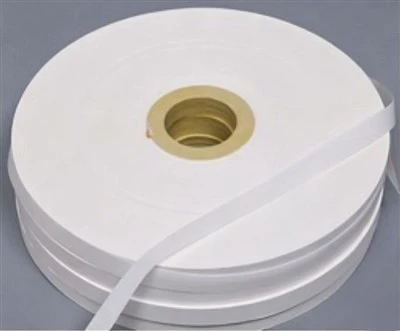
I’ve been in this industry for 7 years, and one thing I’ve learned is that a lot of scientists take filter paper for granted. It’s not as flashy as a new mass spec machine or a fancy centrifuge, but it’s the backbone of so many experiments. A lab can have all the best equipment in the world, but if their filter paper tears during a separation, or adds extra weight to a gravimetric sample, the whole experiment goes off the rails. That’s why I make sure my inventory has every type of filter paper you can think of—fast, medium, slow, sterile, low-ash, custom-cut disks, you name it.
Mulch Film Paper If you’re a lab manager, a research scientist, a teacher, or anyone who needs consistent, reliable filter paper for their work, let’s chat. I can help you figure out exactly what type you need, whether it’s for a high school class, a Fortune 500 environmental lab, or a forensic team working on a case. Don’t settle for cheap, untested paper—your experiments (and your sanity) are worth it. Reach out to me, and we can work out a supply schedule that fits your needs.
References
- Harris, D. C. (2020). Quantitative Chemical Analysis (10th ed.). W.H. Freeman and Company.
- Cappuccino, J. G., & Sherman, N. (2019). Microbiology: A Laboratory Manual (12th ed.). Pearson.
- Ravey, J. C., & Bazire, M. J. (2018). Solid-Phase Extraction: Principles and Practice. Journal of Chromatography Library.
- Saferstein, R. (2021). Criminalistics: An Introduction to Forensic Science (13th ed.). Pearson.
- Whatman. (2022). Filter Paper Types and Applications. GE Healthcare Life Sciences.
Shanghai Rongying Industrial Co., Ltd.
As one of the most professional filter paper manufacturers and suppliers in China, we’re featured by quality products and good price. Please rest assured to wholesale customized filter paper from our factory. If you have any enquiry about quotation and free sample, please feel free to email us.
Address: Jiahua Business Center C building 204 room, No.808 Hongqiao Road,Xuhui District,Shanghai,China
E-mail: info@shryspecialtypaper.com
WebSite: https://www.woolpaper.com/
